01 Preparation
MAISHI Rockshield Mesh
Installation Procedure Overview- Material Preparation Check: Thoroughly verify that all delivered rockshield mesh rolls are intact. Ensure there are no tears, scratches, or missing parts.
- Site Inspection & Tooling: Prepare cable ties, binding wire, or special fixing straps for immediate use. Confirm that proper cutting tools are ready for field adjustments.
According to different purchased rockshield mesh sizes and pipeline diameters, there are three primary installation methods:
- Method selection depends on pipeline diameter and mesh width.
- Refer to specific method guides for details on overlap widths and fixation spacing.
02 Wrapping Methods

Longitudinal Wrapping
Lay the rockshield mesh parallel to the pipeline axis (longitudinal direction).
- Cutting: Unroll and cut to the required length of the pipeline.
- Alignment: Lay mesh flat on the surface, covering from end to end.
- Overlap: Keep overlap ≥ 10cm between adjacent meshes at the bottom.
- Fixing: Fix circumferentially every 0.5m using ties or wire.
- Inspection: Ensure a close fit without looseness or lifted edges.

Latitudinal Wrapping
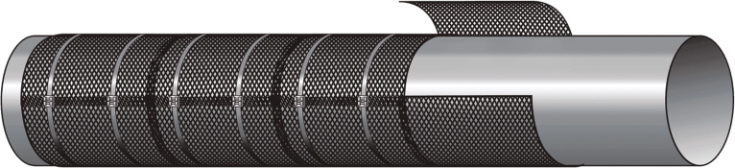
Wrap the rockshield mesh around the pipeline transversely, similar to a "ring clamp."
- Sizing: Length = Circumference + 100mm; Width = Diameter + 150mm.
- Overlap: Circumferential overlap ≥ 10cm, positioned at the bottom of the pipeline.
- Fixing: Secure tightly using cable ties or binding wire.
- Sequence: Install pieces one by one with an axial overlap of 10cm.
- Inspection: Ensure all joints between adjacent pieces are tight.

Spiral Wrapping
Wrap the rockshield mesh around the pipeline in a continuous spiral at an angle.
- Angle: Start from one end at an angle of approximately 30°–45°.
- Continuity: Wrap spirally forward while maintaining mesh tension.
- Overlap: Maintain a consistent overlap of ≥ 10cm between turns.
- Reinforcement: Secure with ties at necessary positions and bends.
- Coverage: Ensure full surface coverage with no exposed pipe areas.
DOUBLE-LAYER WRAPPING
Special Protection Method- Harsh Backfilling Environment Backfill contains a large number of sharp stones or the soil is hard, which may impact the coating.
- Low-Grade Pipeline Coating Thin or fragile coatings that require additional mechanical protection layers.
- High-Risk Strategic Areas Specific designs for mountain crossings, river sections, or areas with falling rock risks.
- Owner Specification When direct project requirements specify enhanced dual-layer shielding.
- Mesh Sizing: Cut mesh according to pipeline circumference. Length = diameter + 100mm; Width = diameter + 150mm.
- Direct Wrapping: Wrap the cut piece directly around the pipeline.
- Overlap Position: The overlap should be positioned at the bottom of the pipeline.
- Circumferential Fix: Overlap parts (overlap ≥ 10 cm) and fix with cable ties or binding wire.
- Axial Placement: Install pieces one by one along the pipeline with axial overlap of about 10 cm.
- Joint Check: Check all fixing points to ensure tight joints between adjacent pieces.
- Base Preparation: After completing and checking the first layer, start installing the second layer.
- Wrapping Strategy: Wrap over the first layer using spiral cross-wrapping or staggered overlapping.
- Cushioning Effect: Keep layers moderately loose; avoid over-tightening to maintain impact absorption.
- Reinforced Fixing: Use denser cable ties or binding wire to ensure the two layers are firmly attached.
FEATURES: Provides maximum mechanical resistance for large-diameter pipelines. Firm installation, suitable for harsh environments. While it requires more material and splicing, it ensures the highest safety level in high-risk backfill conditions.
Rockshield Mesh Quick Estimator
Estimation Summary:
Estimated Area: 0 m²
Required Mesh Rolls: 0 (Rolls)
Best HDPE Rockshield Installation: 4 Professional Methods
Effective HDPE Rockshield installation is essential for protecting pipeline coatings from rock damage during backfilling. As a leading manufacturer, MAISHI provides this comprehensive guide to ensure your project meets the highest industry standards.
- Longitudinal HDPE Rockshield Installation
- Latitudinal Wrapping Techniques
- Spiral & Double-layer Protection
During the HDPE Rockshield installation process, selecting the right wrapping method depends on the pipe diameter and terrain. Whether you are using the longitudinal or latitudinal approach, the HDPE Rockshield installation must be tight and secure to prevent shifting.

Our products comply with HDPE material standards (External Link) to ensure long-term durability. For specific project quotes or technical data sheets, please contact our engineering team (Internal Link) for a professional HDPE Rockshield installation solution.